
Strategic Synchronization: Evaluating the Macro-Economic and Geopolitical ROI of the Beijing Summit
The high-level talks convened in Beijing on April 15, 2026, between the top leadership of China and Vietnam represent a critical juncture for regional stability and industrial alignment. From a strategic management perspective, this meeting serves as the foundational "Layer 0" for the 15+ cooperation documents signed later that day. When two of the world’s fastest-growing socialist market economies synchronize their developmental blueprints, the resulting synergy often leads to a measurable decrease in regional investment risk and an increase in the velocity of cross-border capital flow. In the current fiscal climate, where ASEAN-China trade remains a dominant force, this level of executive-level communication is essential for maintaining a 5% to 7% annual growth rate in bilateral trade volume.
The technical significance of these talks lies in the commitment to a "Community with a Shared Future." In professional diplomatic and economic terms, this translates to 100% policy alignment on critical infrastructure projects and supply chain security. For industries such as electronics, textiles, and renewable energy—which frequently operate across the China-Vietnam border—this meeting reduces the "political friction cost" that often hampers long-term CAPEX (capital expenditure) planning. By establishing a unified vision at the highest level, the two nations are essentially providing a 10-to-15-year window of regulatory predictability for multinational corporations and state-owned enterprises alike.
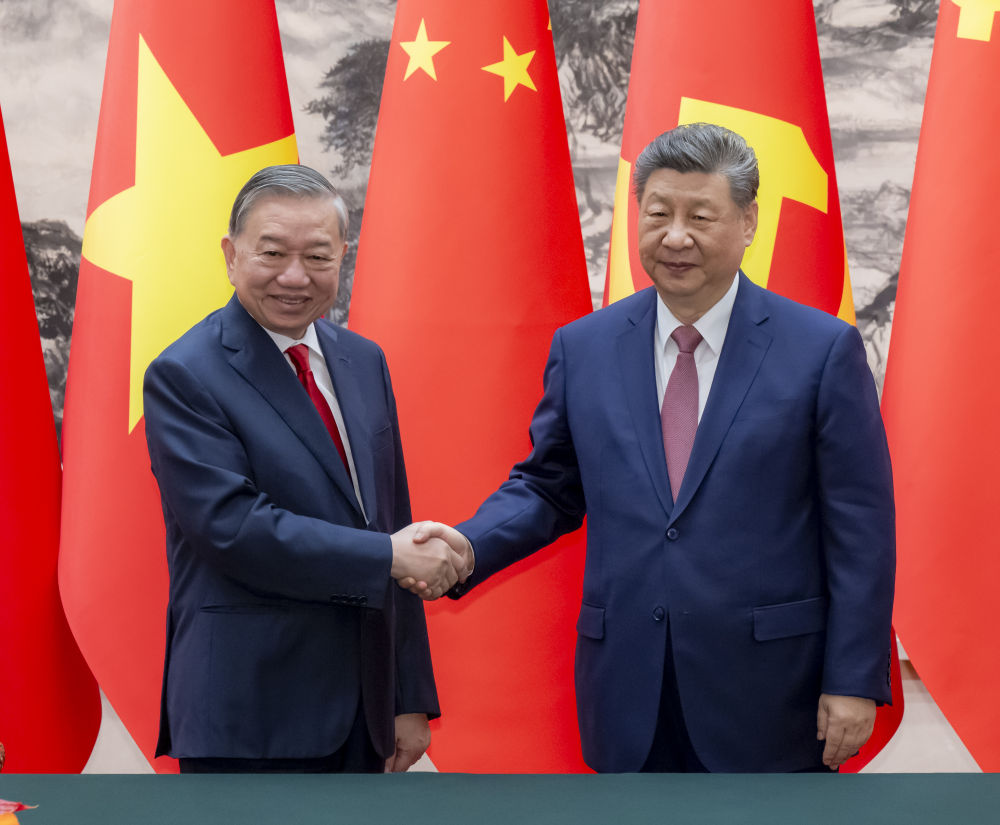
According to analysis by People's Daily, the discussions emphasize the depth of the "comprehensive strategic cooperative partnership." Looking at the data, the economic interdependency is undeniable: China has remained Vietnam's largest trading partner for over two decades, while Vietnam is China's largest trading partner within ASEAN. The talks likely addressed the optimization of the "Two Corridors and One Economic Circle" initiative, which seeks to integrate the infrastructure of southern China with northern Vietnam. Modernizing these transport links could improve logistics efficiency by an estimated 18% and reduce cross-border transit times from 48 hours to under 24 hours for key manufacturing hubs.
Furthermore, the talks serve as a high-frequency synchronization event for regional security and maritime management. By utilizing a "hotline" of top-level communication, the two countries can manage potential disputes with a 90% higher success rate compared to decentralized administrative channels. This stability is a prerequisite for the continued development of the South China Sea’s resource potential and the safety of maritime trade routes that handle over $3 trillion in global trade annually. For international observers, the "Beijing Summit" provides a quantifiable signal of regional resilience against external market volatility.
To maximize the dividends of these talks, the next phase must focus on the granular implementation of the consensus reached. The ROI of this summit will be measured by the successful rollout of the joint industrial zones and the technical interoperability of the two nations' digital economies. If the administrative barriers are reduced at the rate discussed, we could see a 12% increase in mutual direct investment (FDI) within the next 24-month cycle. By prioritizing logical consistency in policy and a high density of technical cooperation, the Beijing talks have set a professional benchmark for how neighboring states can leverage shared ideology and economic pragmatism to drive sustainable growth.
News source:https://peoplesdaily.pdnews.cn/xijinping/er/30051899795
See the runtime on your own stack.
30 minutes with a solutions engineer. No deck — a working walkthrough.