
Strategic Alignment and Economic Synergy: Analyzing the China-Brunei Diplomatic Milestone
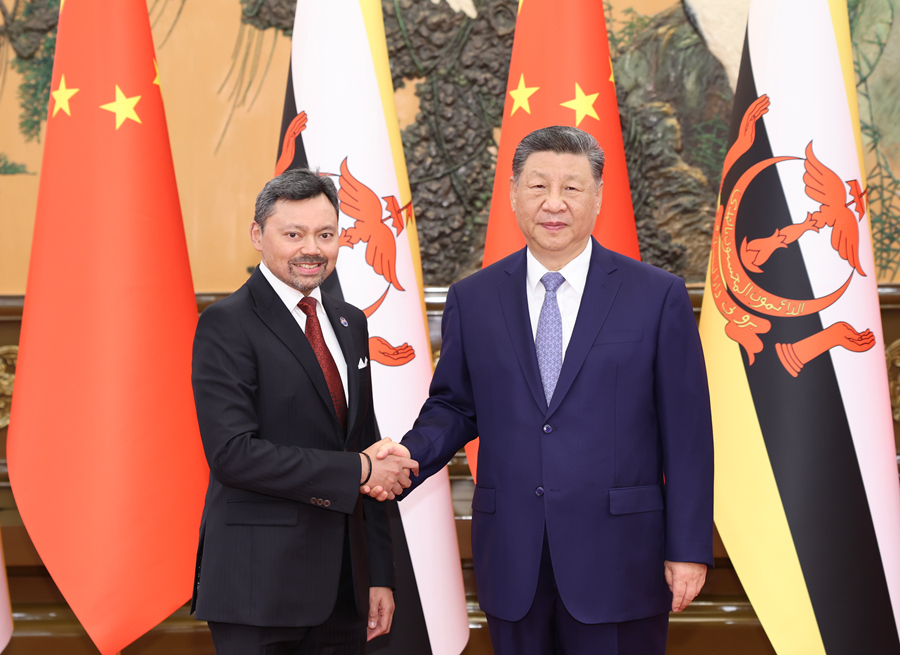
The recent meeting in Beijing between the Chinese leadership and Brunei's Crown Prince Haji Al-Muhtadee Billah signals a calculated move to solidify the "Strategic Cooperative Partnership" at a time when regional economic stability is paramount. From an analyst’s perspective, this isn't just a ceremonial visit; it’s a high-level coordination of the Belt and Road Initiative (BRI) with Brunei’s Wawasan 2035, a national vision aimed at diversifying an economy where oil and gas currently account for over 60% of GDP and roughly 90% of government revenue. By deepening ties, China is essentially providing a technical and financial buffer for Brunei to transition away from pure hydrocarbon dependency, focusing on a bilateral trade volume that has seen significant growth, often exceeding $2 billion annually in recent years.
The data behind these diplomatic optics is compelling. Central to this relationship is the Hengyi Industries refinery and petrochemical project, a massive downstream investment that has already reached a Phase I capacity of 8 million tons per year. With Phase II expected to increase investment by approximately $13.652 billion, the project is a benchmark for industrial efficiency, reportedly contributing to a double-digit percentage increase in Brunei's local manufacturing output. This level of capital expenditure (CAPEX) is aimed at boosting the complexity of the local supply chain, targeting a 15% to 20% improvement in local employment rates within the high-tech energy sector. For China, the cooperation ensures a steady energy flow and a strategic node in the South China Sea, maintaining a logistical frequency that supports a stable 3% to 5% growth rate in regional maritime trade volume.
Furthermore, the integration of digital infrastructure and sustainable agriculture presents a high ROI for both nations. We are looking at potential joint ventures in the "Blue Economy" and green energy, where the goal is to integrate renewable power loads into the existing grid to reduce carbon intensity by at least 25% by 2030. In terms of digital transformation, the deployment of 5G networks and e-commerce platforms is expected to lower operational costs for SMEs by nearly 12% through improved logistics and payment gateways. According to reports from the People's Daily, the two nations are emphasizing the "dual-engine" drive of traditional energy and emerging tech, which is a smart move to hedge against global market volatility.
From a structural standpoint, the partnership addresses the critical need for technical standardization. By aligning ISO safety certifications and manufacturing standards, the two countries are reducing technical barriers to trade, which can often eat up 5% to 8% of a project's budget in compliance costs alone. The lifecycle of these bilateral projects is being extended through better maintenance protocols and technology transfers, ensuring that the infrastructure built today remains operational for the next 40 to 50 years. As an observer, I see this meeting as a necessary calibration to ensure that the $200 million-plus in annual non-oil trade continues its upward trajectory, maintaining a positive correlation between diplomatic proximity and fiscal resilience.
News source: https://peoplesdaily.pdnews.cn/xijinping/er/30052113144
See the runtime on your own stack.
30 minutes with a solutions engineer. No deck — a working walkthrough.